01 / SWITCH
Choose the switch
Use the traditional, designer or vintage latching dry-contact switch that suits the room.
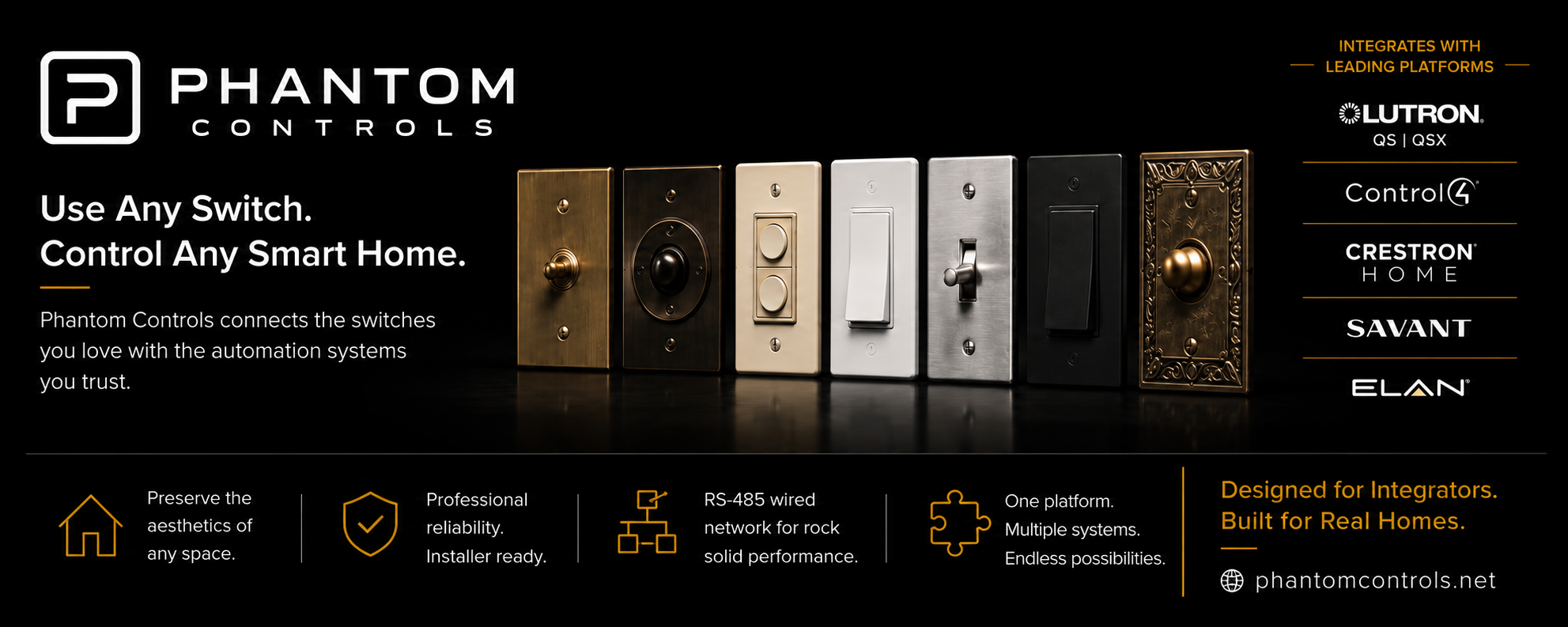
Phantom Controls connects architectural, traditional, designer and vintage latching wall switches to modern smart home automation—preserving the switch at the wall while centralizing the control platform at the rack.
Built for integrators, designers and premium residential projects.
Phantom creates a shared low-voltage wall switch automation layer, so existing wall switches can stay architectural while the smart home intelligence remains centralized and serviceable.
A dry-contact input at the wall, a shared RS-485 transport layer and a receiver that handles smart home switch integration.
Use the traditional, designer or vintage latching dry-contact switch that suits the room.
Phantom-TX reads the contact state and applies its locally selected address.
TX locations communicate over the common 24V + RS-485 bus.
Phantom-RX receives field events and presents them to the selected control ecosystem.
Keep real toggles, antique mechanisms, designer plates and existing wall switches in deeply automated homes—including sensitive renovations and historic houses.
A structured field bus provides deterministic switch events, centralized serviceability and a topology that fits professional installations.
The wall-side layer stays consistent while receiver-side software handles translation into the chosen automation system.
Preserve the visual language of contemporary interiors and historic homes without giving up intelligent lighting and control.
Gain a structured, serviceable switching layer designed around rack-side integration and field-friendly addressing.
Keep the switches that feel right in the house while the automation system remains modern and flexible behind the scenes.
Phantom is being built around a receiver-side adapter architecture, with Lutron HomeWorks QS/QSX and Control4 wall switch integration among its targets, so physical switch infrastructure can remain stable while software integrations evolve.
Platform names are trademarks of their respective owners. Compatibility is subject to validation, software revision and final production configuration.
Phantom Controls is moving through hardware refinement, firmware hardening, integration validation and real-world beta preparation.